The Short Version
- In most states, landlords are legally obligated to fix mold caused by structural issues, plumbing failures, or deferred maintenance. You don't have to live with it.
- Document everything in writing. Photos, dates, certified mail. Verbal complaints carry almost zero legal weight.
- Several states allow tenants to withhold rent, repair-and-deduct, or break leases over unresolved mold. But the procedures are strict and vary by state.
- Shared HVAC systems and neighbor water damage make rental mold uniquely dangerous. Your neighbor's leak can become your mold problem within 48 hours.
- A professional mold inspection ($300-$600) is the single strongest piece of evidence you can have if this escalates to a legal dispute.
Somewhere around 35 million rental units in the U.S. have at least one of the conditions that lead to mold growth: persistent leaks, poor ventilation, or deferred maintenance. That's not an estimate pulled from thin air. The American Housing Survey consistently reports that roughly one in four renter-occupied units has some form of water intrusion or moisture problem, and where there's sustained moisture, mold is a question of "when," not "if."
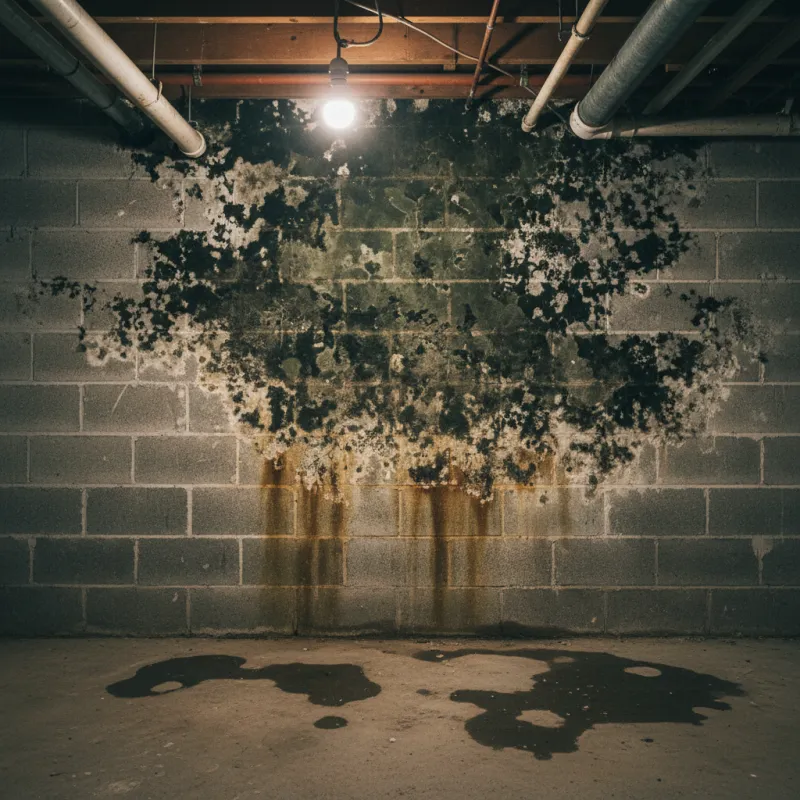
If you're reading this, odds are you've already found it. Maybe it's a dark patch spreading across the bathroom ceiling. Maybe you pulled out the dresser and found something growing on the wall behind it. Maybe you can't see anything, but your apartment smells musty and your allergies are worse than they've ever been.
Here's what most tenants don't know: you have more legal protection than you think, and your landlord has more legal obligation than they'll voluntarily admit. But exercising those rights requires you to do things in a specific order and document every step. This guide walks you through all of it.
Not legal advice. This article provides general information about tenant rights related to mold. Laws vary significantly by state and municipality. For your specific situation, consult a tenant rights attorney or your local legal aid society. Many offer free consultations.
What's In This Guide
- Your rights as a tenant (CA, TX, FL, NY breakdown)
- How to document mold so your complaint actually sticks
- What your landlord is required to do (and by when)
- When you can withhold rent or break your lease
- Health risks that are specific to rental units
- How to get a professional mold inspection as a tenant
- Legal options when your landlord won't act
1. Your Rights as a Tenant
There is no single federal law that says "landlords must remove mold." What exists instead is a patchwork of state and local laws built on one foundational concept: the implied warranty of habitability. Nearly every state recognizes this in some form. It means your landlord is legally obligated to maintain your rental in a condition that's fit for human habitation. Mold that poses health risks or results from structural defects falls squarely within that obligation.
But the details vary enormously by state. Here's how the four largest renter-population states handle it.
California
California has some of the strongest tenant protections in the country when it comes to mold. The state's Health and Safety Code (Section 17920.3) specifically lists mold as a substandard condition when it's present in quantities that threaten the health of occupants. Landlords are required to disclose known mold contamination to tenants before signing a lease. Tenants can use the "repair and deduct" remedy for mold issues — you pay for the remediation (up to one month's rent) and deduct it from your next rent payment, provided you gave written notice and the landlord failed to act within a reasonable timeframe, which California courts generally interpret as 30 days for non-emergency situations.
New York
New York City passed Local Law 55 in 2018, which specifically addresses indoor mold. It requires landlords to investigate and remediate mold in occupied units within a prescribed timeframe. NYC tenants can file complaints with the city's Department of Housing Preservation and Development (HPD), which can issue violations and fines. Outside NYC, tenants rely on New York's general habitability law (Real Property Law Section 235-b), which doesn't mention mold explicitly but covers conditions that make a unit unfit. New York also allows rent abatement — a retroactive rent reduction for the period your apartment was affected by a habitability violation.
Texas
Texas takes a more landlord-friendly approach. The state has no mold-specific statute. Tenant protections come from the Property Code, Chapter 92, which requires landlords to repair conditions that "materially affect the physical health or safety of an ordinary tenant." Mold can qualify, but the burden of proof sits heavier on the tenant. Texas requires written notice (preferably certified mail), and the landlord gets a "reasonable time" to respond — which Texas courts have interpreted as 7 days for most situations. If your landlord doesn't act, Texas allows you to terminate your lease, repair-and-deduct (up to one month's rent), or file in justice court. But you have to follow the notice procedures exactly, or you lose your legal standing.
Florida
Florida has no mold-specific tenant protection law, but landlords are bound by Florida Statute 83.51, which requires maintenance of the premises in compliance with building, housing, and health codes. Mold caused by a structural issue (leaking roof, broken pipes) falls under this umbrella. Tenants must deliver written notice giving the landlord 7 days for issues that can be fixed within that period, or 20 days for issues that require a longer repair timeline. Florida allows tenants to withhold rent after proper notice, but you must be current on rent at the time you deliver the notice, and you must follow the statutory procedure exactly. Get this wrong and your landlord can pursue eviction.
| State | Mold-Specific Law? | Notice Required | Repair & Deduct? | Rent Withholding? |
|---|---|---|---|---|
| California | Yes (Health & Safety Code 17920.3) | Written, 30 days reasonable | Yes, up to 1 month's rent | Yes |
| New York | Yes (NYC Local Law 55) | Written, varies by municipality | Case-by-case | Yes + rent abatement |
| Texas | No (general habitability) | Written, 7 days | Yes, up to 1 month's rent | Limited |
| Florida | No (general habitability) | Written, 7-20 days | No explicit provision | Yes (strict procedure) |
Think You Have a Mold Problem in Your Rental?
A professional mold assessment gives you documented proof of the problem — which changes the conversation with your landlord entirely. Most inspections take under two hours.
Get a Free Removal EstimateCompare local mold inspection companies. Free, no-obligation quotes.
2. How to Document Mold So Your Complaint Actually Sticks
This is where most tenants lose their leverage. They call the landlord, have a verbal conversation, and assume the issue is "on record." It isn't. If it's not in writing, it didn't happen. That sounds harsh, but it's how housing courts operate. If this ever goes to a hearing, a judge will ask: "Show me the written notice." If you can't produce one, your complaint loses most of its weight — even if the mold is clearly there.
Here's the documentation protocol that tenant rights attorneys consistently recommend.
Photograph and video everything
Use your phone. Take wide shots showing the affected room and close-ups showing the mold itself. Include a ruler or coin for scale. Photograph any water stains, peeling paint, condensation, or visible leaks near the mold. Take a video that pans from the mold to identifiable features of your apartment (window, light fixture, address number on the door). Make sure your phone's date/time stamp is enabled. Back up these files immediately — cloud storage, email them to yourself, both.
Submit your complaint in writing
Email works as a first step because it creates an automatic timestamp. But for strongest legal protection, send a physical letter via USPS Certified Mail with Return Receipt Requested. This gives you a tracking number proving delivery and a green card signed by whoever received it. Keep both copies. In the letter, describe the mold (location, approximate size, when you first noticed it), any health symptoms you or your household members are experiencing, and a specific request for remediation within the timeframe your state law allows.
Create a written timeline
Start a simple log: date, what happened, who you talked to, what was said. "April 3 — called property management office, spoke with Janet. She said maintenance would come look at it. No date given." This contemporaneous record carries real weight in housing court. Judges know that memories fade and shift. A written log created at the time of events is considered far more reliable than testimony recalled months later.
Document any health impacts
If anyone in your household is experiencing symptoms (coughing, congestion, headaches, rashes, worsening asthma), see a doctor. Ask the doctor to note in your medical record that you reported mold exposure in your home. A medical record linking health symptoms to mold exposure in your rental unit is strong evidence in a habitability complaint. Keep copies of all medical bills — these may be recoverable in a legal action.
Get a professional mold inspection (optional but powerful)
A written report from a certified mold inspector — with air quality readings, moisture measurements, and identified mold species — is the single most compelling piece of documentation you can have. It costs $300-$600, and yes, as a tenant, you typically pay for this out of pocket unless your lease or local law says otherwise. That said, this cost is often recoverable in legal proceedings, and it transforms your complaint from "I think there's mold" to "a certified inspector confirmed Stachybotrys chartarum at 3x normal indoor levels."
Don't clean the mold yourself before documenting it and notifying your landlord. If you remove visible mold before submitting a written complaint, your landlord can argue the problem was minor and you handled it. Worse, you may have inhaled concentrated spores without proper protection. Document first, notify in writing, then let the landlord arrange professional remediation.
3. What Your Landlord Is Required to Do
Once your landlord receives written notice of a mold problem, the clock starts. What they're required to do — and how quickly — depends on your state, your lease, and what's causing the mold. But across nearly every jurisdiction, the baseline obligations are the same.
Investigate the source
Your landlord can't just send someone with a bucket of bleach. If mold is present, something is causing it: a roof leak, pipe failure, poor ventilation, or water intrusion from another unit. Treating the mold without fixing the source guarantees it returns. A responsible landlord will send a plumber, roofer, or maintenance tech to find and repair the moisture source before (or simultaneously with) mold remediation.
Hire qualified remediation
For mold covering more than 10 square feet — the EPA's guideline threshold — remediation should be handled by a qualified professional, not a maintenance worker with a spray bottle. Professional remediation includes containment to prevent spore spread, HEPA air filtration, removal of contaminated materials, and post-clearance testing. Your landlord is not required by law to use a "certified" company in most states, but using unlicensed or unqualified workers is evidence of negligence if the mold returns or causes harm.
Response timelines
Most states don't give landlords unlimited time. Once they've received written notice:
- California: "Reasonable time" — courts generally say 30 days for non-emergencies, much less if health symptoms are reported
- New York City: HPD violations have specific cure periods; indoor allergen hazards (which includes mold) typically require remediation within 30 days of inspection
- Texas: 7 days is the standard "reasonable time" for health and safety repairs
- Florida: 7 days for repairs that can be done within 7 days; 20 days for more involved work
If mold is causing active health symptoms — particularly respiratory distress in children, elderly tenants, or immunocompromised individuals — courts in most jurisdictions consider this an emergency. Emergency timelines are measured in days, not weeks.
Watch for "cosmetic fixes." Some landlords will paint over mold, install a dehumidifier, or apply a surface antimicrobial spray and call it done. None of these address the underlying moisture source or remove established mold colonies from porous materials. If your landlord applies a surface treatment without investigating the cause, document it and follow up in writing noting that the root cause has not been addressed.
Landlord Dragging Their Feet?
A certified mold assessment gives you objective, third-party documentation that your landlord can't dismiss. It also tells you exactly how serious the problem is — so you can make informed decisions about next steps.
Call (888) 751-3962Free phone consultation with a local mold specialist. No landlord approval needed.
4. When You Can Withhold Rent or Break Your Lease
This is the part most tenants are afraid of, and for good reason. Done wrong, withholding rent gets you an eviction notice. Done right, it's one of the most effective tools you have to force action on a landlord who's been ignoring your complaints.
The legal doctrine at work here is called constructive eviction. The idea is straightforward: if your landlord allows conditions to deteriorate to the point where your unit is no longer livable, they've effectively evicted you — even though they haven't formally asked you to leave. Mold that causes documented health problems or makes a portion of your unit unusable can qualify.
Rent withholding
States that allow rent withholding for habitability violations (including California, New York, Florida with proper procedure, and about 25 others) have strict requirements. You typically must:
- Be current on rent at the time you begin withholding
- Have delivered written notice with a specific timeline for repair
- Have waited the legally required period without adequate resolution
- In some states, deposit withheld rent into an escrow account (not just keep it)
If you skip any of these steps, your landlord can pursue eviction for non-payment, and the mold problem becomes a secondary issue in court rather than the primary one. Follow the procedure. Get it right.
Repair and deduct
California and about a dozen other states allow tenants to hire their own contractor, pay for the repair, and deduct the cost from rent. In California, the deduction is capped at one month's rent. This is a practical option for smaller mold problems that your landlord won't address, but be careful: the repair must be done by a qualified professional, the amount must be reasonable, and you need documentation of every dollar spent. Keep the invoice, the cancelled check or credit card statement, and before-and-after photos.
Lease termination
Breaking your lease over mold is possible in most states, but it's the nuclear option. You generally need to demonstrate:
- The mold makes your unit substantially unfit for habitation
- You notified the landlord in writing and gave reasonable time for repair
- The landlord failed to remediate or the remediation was inadequate
- A professional inspection report or health department citation confirming the severity
If you can document all four of these elements, most tenant rights attorneys will tell you that you have a defensible position for terminating your lease without penalty. But "defensible" is not the same as "guaranteed." Talk to an attorney before you take this step. Many tenant rights organizations offer free or sliding-scale consultations specifically for habitability disputes.
Contact your local tenant rights organization or legal aid society first. Every state has different rules. Some require escrow deposits. Some require a specific number of days' notice. Some require you to have been current on rent for a specific period before withholding. A 30-minute consultation with a tenant rights attorney — often free — can save you from an eviction filing that would follow you for years.
5. Health Risks That Are Specific to Rental Units
Mold in a rental is not the same exposure risk as mold in a house you own. Three things make rental mold uniquely dangerous, and all of them come down to factors that are completely outside your control as a tenant.
Shared HVAC systems
Many apartment buildings use centralized heating and cooling systems, or at minimum, shared ductwork between adjacent units. Mold in one unit's HVAC connection doesn't stay in that unit. Spores travel through the duct system and seed every unit on the same air handler. You can keep your apartment spotless and still have elevated mold spore counts because of a problem three doors down. In buildings with through-wall HVAC units (common in older apartment stock), the units themselves are often installed in exterior wall cavities where condensation and water intrusion create ideal mold conditions.
If you're experiencing allergy symptoms, respiratory irritation, or persistent congestion that seems unrelated to anything in your own unit, shared HVAC contamination is a real possibility. The only way to confirm it is with an air quality test.
Neighbor water damage
In multi-unit buildings, water flows downward and sideways through shared structural elements. A burst pipe in the unit above you saturates the ceiling and wall cavity of your unit. A shower pan failure in the unit next door sends moisture through the shared wall framing. You don't control your neighbors' plumbing, their maintenance habits, or how quickly they report leaks. But you absorb the consequences.
Ceiling stains, bubbling paint, and musty odors that appear without any water event in your own unit are the telltale signs of neighbor-sourced moisture. Report these immediately in writing. The moisture source may be in another unit, but the mold growing in your unit is still your landlord's responsibility to remediate.
Deferred maintenance at scale
A homeowner who sees a roof leak fixes it (or at least knows they should). A property management company overseeing 200 units triages repairs by urgency, budget, and liability — and mold often gets deprioritized because it doesn't cause an immediate emergency the way a gas leak or electrical fault does. The result is that rental units frequently have moisture problems that persist for months before anyone addresses them. By the time maintenance arrives, the mold colony is established, deep in the wall, and far more expensive to remediate than it would have been at the two-week mark.
The health impact is cumulative. Mold doesn't cause acute illness in most people the way food poisoning does. Instead, it sensitizes your immune system over time. The longer you're exposed, the lower the threshold for triggering symptoms. Tenants who've lived with low-level mold exposure for months sometimes develop chronic sinusitis, exercise-induced asthma, or persistent fatigue that continues even after remediation — because their immune system has been primed to overreact to mold antigens at levels that wouldn't normally cause symptoms.
If you can document that your health symptoms resulted from mold that your landlord was notified about and failed to remediate, medical expenses may be recoverable through a habitability lawsuit or personal injury claim. Keep all medical records, pharmacy receipts, and documentation linking your symptoms to the mold in your rental unit. Many tenant rights attorneys work on contingency for mold-related health claims.
Worried About Your Family's Health?
You don't need your landlord's permission to get a professional mold assessment. An air quality test tells you exactly what you're breathing — and gives you the evidence to demand action.
Call (888) 751-3962Talk to a certified mold specialist. Free consultation, available 7 days a week.
6. How to Get a Professional Mold Inspection as a Tenant
Here's a question tenants ask constantly: "Can I hire a mold inspector, or does the landlord have to do it?" The answer: you can hire one yourself, and in many situations, you should.
A landlord-hired inspector creates a potential conflict of interest. The inspector knows who's paying the bill. A tenant-hired inspector works for you, reports findings to you, and provides documentation that you control. That distinction matters if this becomes a legal dispute.
What to look for in an inspector
- Certification: Look for a Certified Mold Inspector (CMI) through ACAC or a Certified Industrial Hygienist (CIH). These are the credentials that carry weight in housing court.
- Independence: Your inspector should not also offer remediation services. The inspection and the remediation should be separate companies to avoid conflict of interest. An inspector who also sells remediation has a financial incentive to overstate the problem.
- Report quality: Ask to see a sample report before hiring. A good inspection report includes air sampling results compared to outdoor control samples, moisture readings with specific locations mapped, identification of mold types present, photographs, and remediation recommendations. This is the document that does your talking for you in a complaint or legal filing.
What to expect
A thorough mold inspection for a rental unit takes 1-2 hours. The inspector will use a moisture meter to check walls, ceilings, and floors around the affected area. They'll take air samples (typically 2-4 locations plus an outdoor control) and may take surface swab samples of visible mold. Air samples go to a lab; results come back in 3-5 business days. The full report with findings and recommendations typically arrives within a week.
Costs and who pays
Expect to pay $300-$600 for a residential mold inspection with air quality testing. Some inspectors charge less for single-room assessments. As a tenant, you generally pay out of pocket upfront. However:
- In states with repair-and-deduct provisions, the inspection cost may qualify as a deductible expense (check your state law)
- If you file a habitability complaint and prevail, inspection costs are typically recoverable
- In a personal injury or negligence lawsuit, inspection costs are included in damages
- Some tenants' insurance policies cover mold testing under "additional living expenses" — call your agent and ask
Access issues: Your landlord cannot legally deny you access to your own unit to perform an inspection you've hired. However, if the inspector needs access to areas outside your unit (shared HVAC, crawl space, roof), you may need landlord cooperation or a code enforcement inspection. If your landlord blocks access to common areas, document the refusal in writing — it's strong evidence of non-cooperation in a habitability proceeding.
7. Legal Options When Your Landlord Won't Act
You've documented everything. You've sent certified mail. You've waited the legally required period. Your landlord still hasn't fixed the mold, or they sent someone who painted over it, and it's back. Now what?
You have several escalation paths, and they're not mutually exclusive. You can pursue more than one simultaneously.
File a complaint with your local health department or code enforcement
This is usually the fastest path to getting your landlord's attention. Health department and code enforcement inspectors have the authority to inspect rental properties, issue violations, and impose fines. A violation citation from a government inspector carries far more weight than a tenant complaint alone. In most jurisdictions, you can file this complaint for free — call your city or county health department and ask about housing complaint procedures. Once a violation is issued, your landlord is on a government-mandated timeline to fix it, with increasing fines for non-compliance.
Contact a tenant rights organization
Every state has legal aid organizations that specialize in tenant rights. Many offer free consultations, and some provide free representation for habitability cases. National resources include the National Housing Law Project, Legal Aid in your county, and HUD's tenant rights page. These organizations know the specific procedures and case law in your jurisdiction, and they deal with landlords who ignore mold complaints regularly.
File a habitability lawsuit
If you've exhausted administrative remedies, a habitability lawsuit allows you to seek rent abatement (partial refund of rent for the period your unit was substandard), reimbursement for inspection and medical costs, moving expenses if you had to relocate, and in some cases, emotional distress damages. Many tenant attorneys take habitability cases on contingency — meaning no upfront cost to you. They get paid from the settlement or judgment.
Small claims court
For total damages under your state's small claims threshold (usually $5,000-$10,000), small claims court is a faster, cheaper option than a full civil lawsuit. You don't need an attorney. Bring your documentation: written complaints, certified mail receipts, photographs, your timeline log, the inspection report, and medical records. Small claims judges see landlord habitability cases regularly and know the law. A well-documented case with a professional inspection report is persuasive.
Housing authority complaint (Section 8 / subsidized housing)
If you're in subsidized housing or a unit that receives government funding, your landlord is subject to additional inspection and maintenance requirements. Contact your local Public Housing Authority (PHA) or HUD regional office. Federal housing quality standards require units to be free from health hazards, and mold qualifies. Violations can result in the landlord losing their housing subsidy contract — which is a powerful motivator.
Every state has laws prohibiting landlord retaliation against tenants who exercise their legal rights — including filing habitability complaints, contacting code enforcement, or withholding rent under proper legal procedure. If your landlord raises your rent, threatens eviction, cuts services, or harasses you after you file a mold complaint, document it and report it. Retaliation is a separate cause of action that can result in additional damages in your favor. The law is on your side here.
Ready to Get Professional Documentation?
Whether you're building a case, pushing your landlord to act, or just trying to figure out how serious the problem is — a certified mold assessment is the first step. We connect you with independent, certified inspectors in your area.
Find a Mold Inspector Near YouIndependent inspectors. Certified reports. No landlord approval required.
What to Do Right Now
If you're dealing with mold in your rental, here's the order of operations. Don't skip steps — each one builds on the last, and the documentation from earlier steps is what gives you leverage in later ones.
Your Action Plan
- Today: Photograph all visible mold, water damage, and moisture sources. Enable timestamps on your photos. Don't clean anything yet.
- This week: Submit a written complaint to your landlord via certified mail. Email a copy for backup. Be specific about location, size, and any health symptoms.
- Keep a log: Start a written timeline of every interaction — calls, visits, responses, non-responses. Date everything.
- If health symptoms exist: See a doctor. Get the mold exposure on your medical record.
- If landlord doesn't respond within the legal timeframe: Get a professional mold inspection. File a complaint with your local health department or code enforcement.
- If landlord still doesn't act: Contact a tenant rights attorney. Many offer free consultations for habitability disputes.
- Throughout this process: Keep living there and paying rent unless a lawyer specifically advises you to do otherwise. Abandoning the unit or stopping rent payments without following proper legal procedure weakens your position.
Mold in a rental is not just a maintenance inconvenience. It's a health issue with legal protections behind it. You have the right to a habitable home. Your landlord has the obligation to provide one. The gap between those two things is closed by documentation, professional evidence, and knowing the specific rules in your state.
The process starts with a phone call.
Free Mold Assessment for Renters
Tell us about your situation and we'll connect you with a certified mold inspector in your area. Independent, no conflict of interest, and no landlord approval needed.
Call (888) 751-3962Available 7 days a week. Free, no-obligation consultation.